 Komal Kushwah
Table of Contents
I was twenty-six, freshly failed, and absolutely furious.
Sure, flunking an exam doesn’t qualify as a global tragedy when people are literally losing homes, fighting wars, and starving to death out there. But when you’ve spent five years of your prime youth chained to a desk, inhaling law and audit books while every friend of yours got drunk on freedom and first kisses, the word FAIL detonates.
That night, I opened Instagram and wanted to vanish. Not because someone was prettier or richer or landed the Coldplay concert tickets I’d trade my pancreas to get. But because everyone looked like they had it figured out, while I hadn’t even begun.
I remember bitterly turning off my phone, flipping open my laptop, and trying to pour it out the only way I know—through words.
But I couldn’t get past, I’ve failed…
The tears I’d denied till now came crashing and wouldn’t stop until dawn. For the whole week, I didn’t leave my room, convinced the moment I stepped out, people would point, stare, and laugh at the FAILURE stamped across my forehead.
It was day four when Papa walked into my room, looking like he’d already made peace with whatever disaster version of his daughter he’d find under the blankets.
“Pack a bag, Kiddo. We’re leaving,” he announced.
The train journey passed in fog. Throughout, my parents kept trying to pull me out, and I kept nodding absentmindedly. I didn’t know when my eyes shut. When my mother shook me awake, the yellow railway signboard read
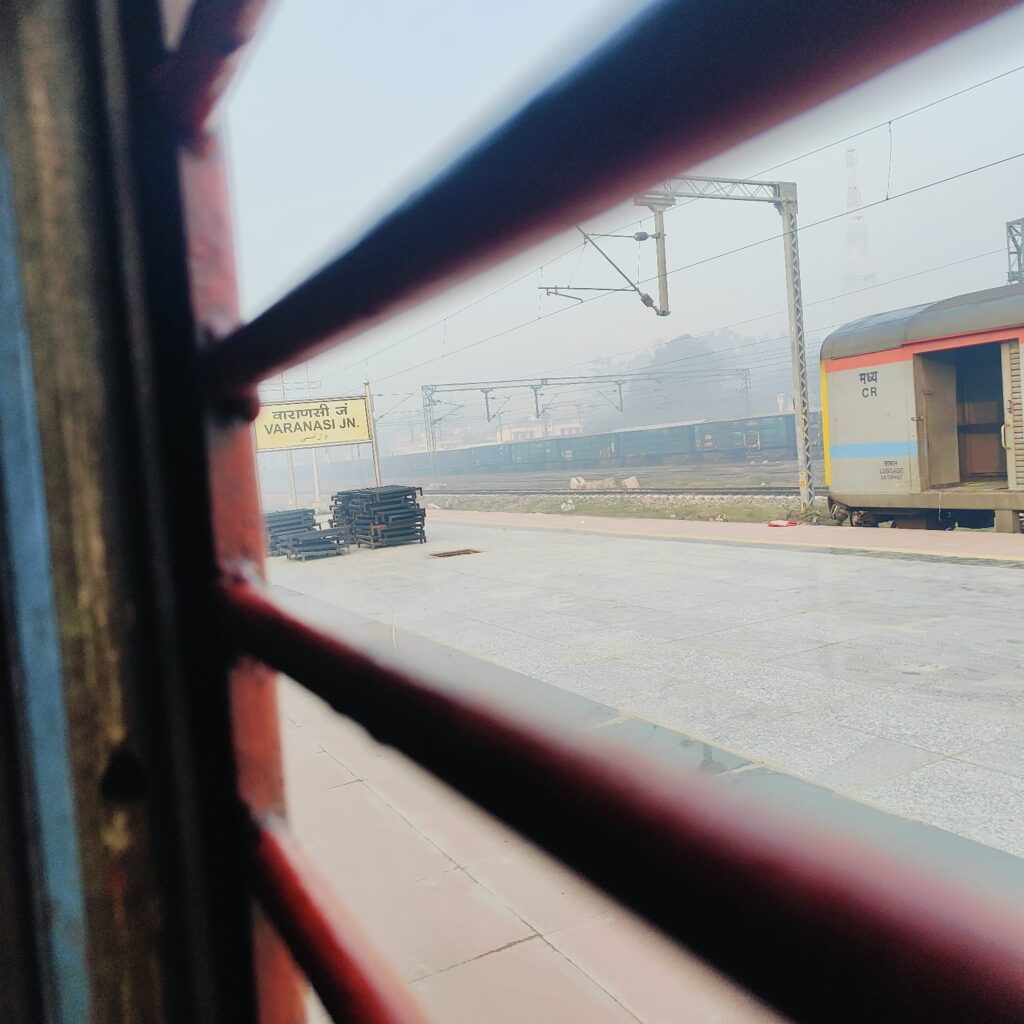
VARANASI
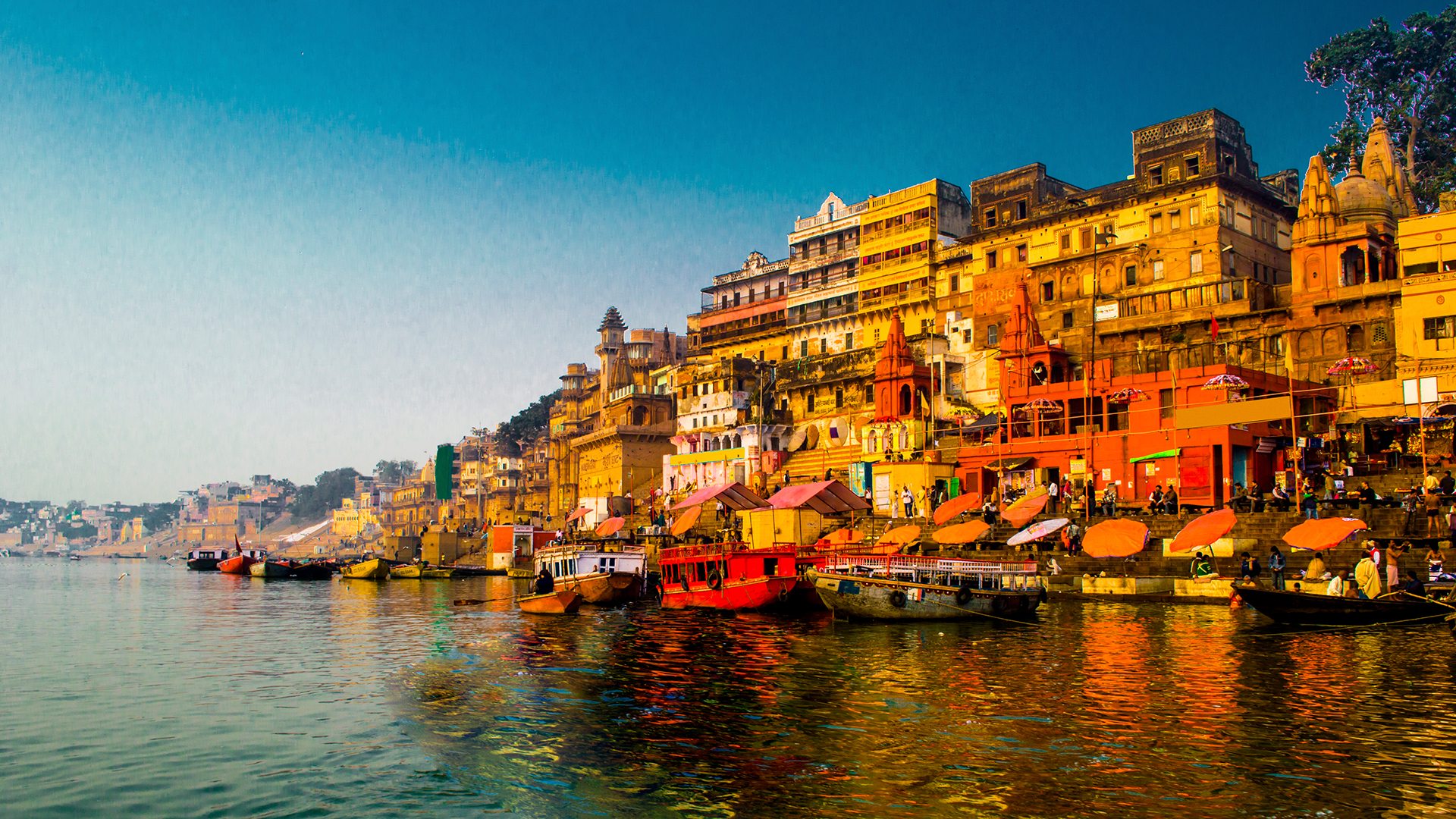
Also known as Kashi (the City of Light) in Hindu scriptures, or Banares to Mark Twain’s romantics, sits on the crescent-shaped western bank of the Ganges in eastern Uttar Pradesh, and is considered the most sacred city in Hinduism.
“It’s Mahadev Shiva’s very own abode,” Mom pointed out, referring to the Kashi Vishwanath Temple mural on the wall. (It’s one of the twelve Jyotirlingas, where Lord Shiva is worshipped as a pillar of infinite light.) “He doesn’t let anyone return empty-handed from here.”
I wanted to tell her I’d probably be the exception, but before I could open my big mouth, a herd of taxi drivers swarmed us, circling like hawks on the hunt for a fare.
Papa chose this lean guy in his early twenties with a goatee, pan-stained teeth, and those sharp spikes that can wound your arteries.
As he drove us through the lanes, I searched for the Varanasi I’d read about in history books and Premchand’s fiction. Some ancient, mystical place dripping with spirituality.
Instead, I got this endless web of galis (lanes) sprawled like a spiderweb in thousands. Some cobblestoned and so narrow I could spread my arms wide and touch the houses on both sides. Laundry hung from every available surface, creating accidental rainbows against weathered brick.
We passed one of those cycle rickshaws I’d only ever seen in old Bollywood movies, and I wondered what the hell Papa was thinking, dragging my glamorously failed ass here.
Right then, we turned a corner and reached the Tirupathi Guesthouse, run by an elderly couple whose main business was sculpting Shiva lingas and side hustle was offering shelter to lost souls like us. You can find plenty like this near Assi or Dashashwamedh—most run ₹800-1,500 per night and come with stories you won’t find on booking sites.
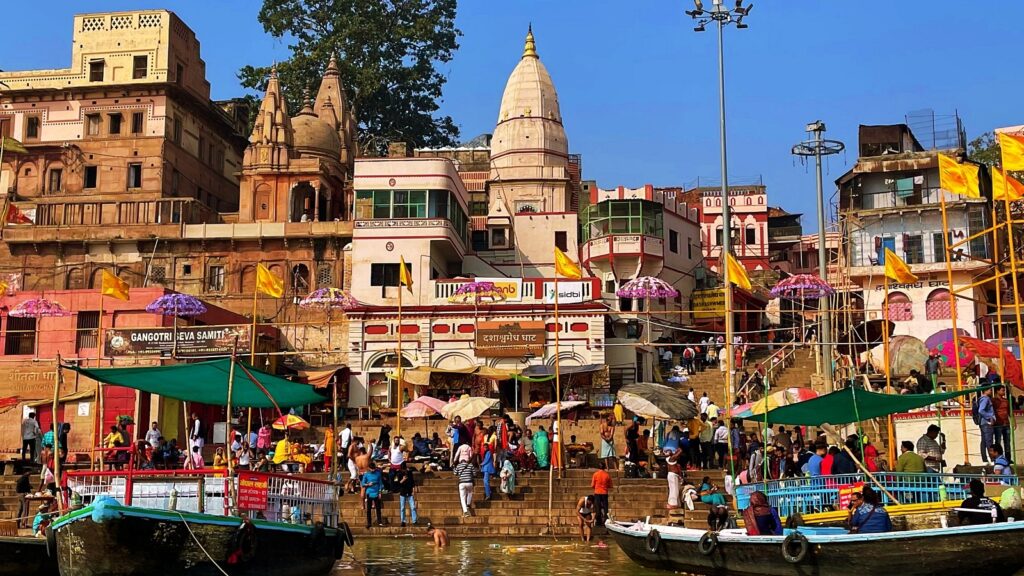
Our first destination was Dashashwamedh Ghat
The name literally means ‘Ghat of Ten Horse Sacrifices’, because according to Hindu mythology, Lord Brahma performed a grand yajna involving ten horse sacrifices here (sometimes said to welcome Shiva to Kashi). These days, the Ghat is famous for the nightly Ganga Aarti, but the morning belongs to pilgrims and ferry-wallas.
The steps to the water were wide and worn-glassy by centuries of feet. Pigeons huddled along the railings. The smell of river water, incense, and sun-rotting marigolds hit me like a brick, flooding every sense I had.
Papa haggled us onto a boat headed for Assi Ghat. We’d be sharing with about twenty other pilgrims, which in India could easily mean thirty. The shared ride cost us ₹100 each. If you’re only after a quick holy dip across the bank, they’ll take you for ₹50. Papa considered a private boat, but those smug captains wanted ₹2000-4000, depending on your negotiation abilities and the aesthetics of the boat.
And that’s how I ended up crammed in with the South Indian family who colonised half the boat, firing off Tamil at bullet-train speed while their amma kept reminding the boatman every two minutes that she needed her holy dip, like she didn’t trust him not to forget her mid-journey.
Honestly, I wouldn’t have either.
The boat pushed off and began gliding over the Ganga’s soft, rippling waves.
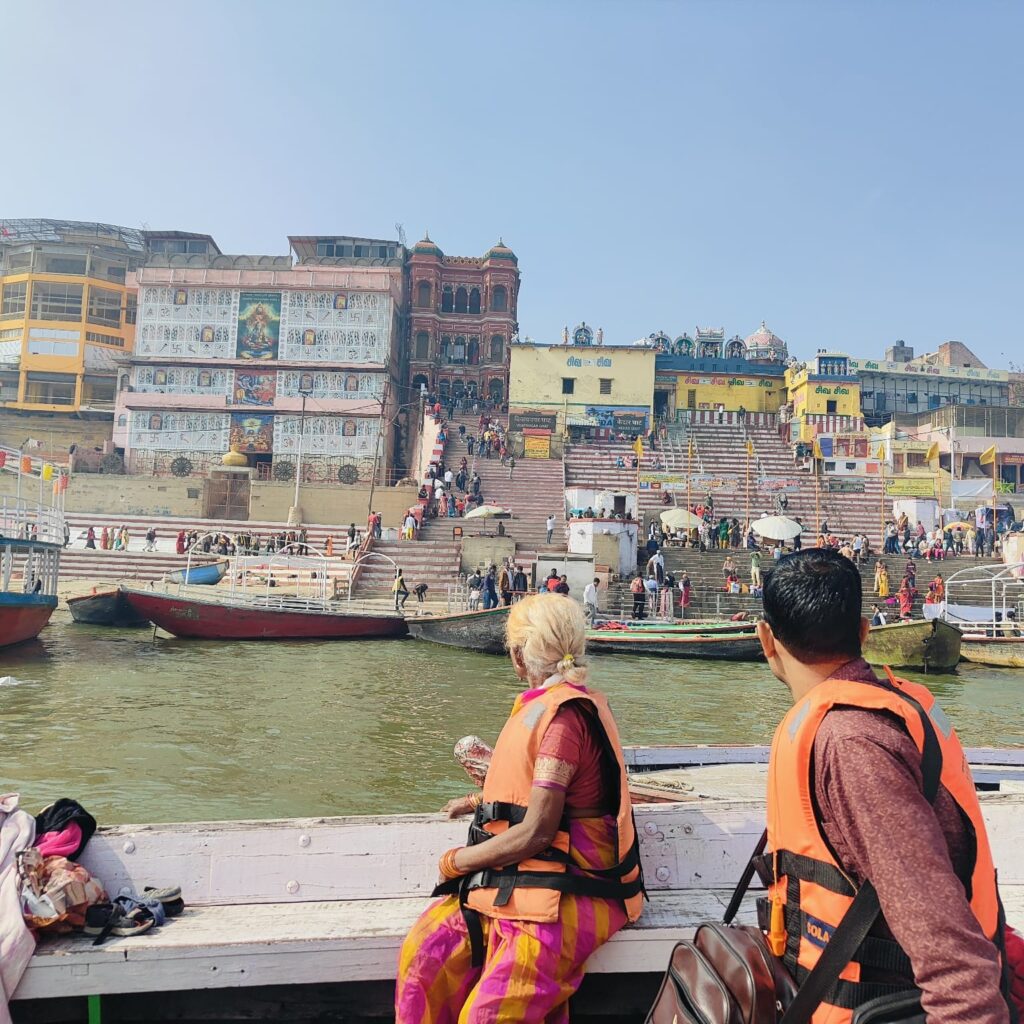
On the opposite bank, couples were busy doing pre-wedding photoshoots against gaudy tent backdrops. One pair was recreating the Titanic pose on a boat while their photographer played Scorsese, directing a blockbuster.
“Why such a long face on such a young girl?” a gentle voice asked.
I turned and met the warmest eyes I’d ever looked into. The man sat a few feet away, dressed entirely in white with a beard so pale it looked like someone had dipped it in milk and forgotten to rinse. He could’ve been seventy, eighty, or ageless. You can never tell with men like him.
“I’m just tired,” I replied.
Bhagwan Bharatdas (a monk whose name I’d only learn later) smiled.
“Tired,” he repeated, rolling the word around gently as if he’d heard it for the first time. “Strange thing to be at your age. People your age are usually tired of being told to rest, not tired from trying to become something.”
Despite my life’s ongoing soap opera, I almost smiled.
“What’s your name?”
“Komal.”
“Delicate,” he nodded (the literal meaning of my name), assessing me with those impossibly steady eyes. “But you don’t look soft right now. You look like you’ve been at war. Did you win?”
That undid me. Not the words, but the way he said them with genuine curiosity, like he actually wanted to know. Or maybe I’d just been waiting to tell someone who had zero stake in whether I passed or failed or burst into flames from disappointment.
So I told him everything, from the exam, the efforts and dedication I’d put in, to the anger that burned my throat, and the frustration that tasted bitter than any poison in the world could.
He listened without interrupting once. When I finally stopped, throat scratched raw and itchy, he stayed quiet for a moment. Then he reached into his simple cloth bag and asked.
“Would you like a Tripundra?” (the three ash lines Shiva devotees wear on the forehead, symbolizing purification and Shiva’s threefold powers of will, knowledge, and action.)
I nodded, more out of politeness than actual desire.
He dipped his fingers into the ash and drew three horizontal lines across my forehead. The touch was cool and smelled faintly of camphor and sandalwood. Then he pressed red kumkum, shaping a small trishul (trident) at my third eye.
“Now,” he said softly, “turn around.”
I did. And I swear my soul shivered.
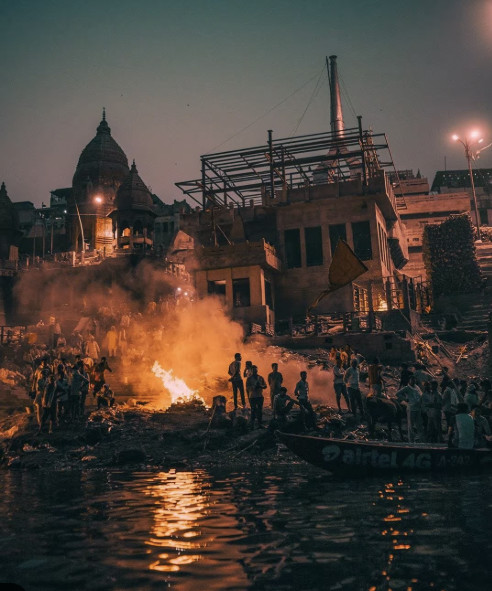
“That’s Manikarnika Ghat,” Bharatdas pointed softly.
Smoke rose in thick columns from the ghat. The air tasted like burning sandalwood, ghee, and human flesh.
The rhythmic, relentless chant of Ram Naam Satya Hai. (Truth is the name of Ram) rolled across the water, and penetrated my soul.
I watched in awe as bodies wrapped in white cloth and marigold garlands kept crowding the ever-burning cremation ground, carried down the steps on bamboo stretchers by sons, brothers, nephews, and friends.
A man in his thirties adjusted logs beneath what I assumed was his father’s body. His hands trembled from maybe acceptance, or perhaps the kind of grief that starts long before the heart actually stops beating.
Beside him stood a young boy of ten with a face as blank as a sheet. He was too young to understand the happening and too old to look away. The fire caught. Sparks shot upward, and the chanting stayed steady as the heat reached us, overshadowing the cold of the water effortlessly.
“Do you know the story of the Mahā-śmaśāna?” Bharatdas asked, eyes glued to the pyre.
I shook my head.
“It’s said,” he began, “that Sati’s (Shiva’s wife) ear ornament slipped off while she bathed in the sacred tank here. Shiva sought it, but the ghat hid it. In anger, he cursed the beautiful place to become a Smaśāna (cremation ground). The demigod pleaded, but the curse, once conferred, couldn’t be revoked.”
He paused, watching another pyre being prepared.
“So Shiva gave the place a boon instead. Instead of being an ordinary shamshāna, it would become the Mahā-shamshāna (the great cremation). He promised that whoever had their final rites performed here would be granted liberation. They say he himself whispers the tārakā mantra into their ears.”
He glanced at the flames. “King or beggar. Scholar or fool. Everyone has to lie in the flames eventually. Death isn’t some far-off idea we pretend it is. It’s right here, on the same steps where people make their living, fall in love, negotiate boat fares, laugh, live, and cry. You said your journey ended before it even began,” he murmured.
“But this,” he nodded toward the flames, “is the only ending any of us get. CS or not, success or not, you and I will come here one day. And none of these things you’re mourning now will matter. So tell me, Komal, what exactly are you grieving? And where did you think you were trying to reach?”
I opened my mouth but couldn’t form an answer.
For weeks, I’d been mourning four letters on a result screen. But sitting on the boat watching bodies turn to smoke, I understood painfully and almost embarrassingly how futile my concerns were in the big picture.
The people on those pyres had dreams, too. Exams they cleared or flunked. Careers that soared or collapsed. Love they held or lost. But every credential, humiliation, and victory was now just smoke drifting over the Ganga.
I’d wanted to become a CS for good reasons. I wanted to make my parents proud, get security, clarity, stability, and the ability to hold my life steady. But somewhere between wanting it and grinding for it, the goal had stopped being a path and turned into punishment.
“Did you understand, kid?” Bharatdas asked gently. I nodded, afraid my voice would crack open if I tried speaking.
He flashed me a smile that folds the skin around your eyes. From his cloth bag, he pulled out prasad, those rock-hard sugar crystals that taste like blessed gravel, and pressed them into my palm.
“Good,” he said. “Now stop crying before you scare away all the fish.”
I laughed till my belly hurt and tears of joy pooled in my eyes.
Bharatdas told me he was walking all the way from Gangotri Glacier in the Himalayas (where the Ganga begins) to Rameshwar in the far south, carrying Ganga water to pour it on Lord Shiva’s shrine. A pilgrimage, stubborn-hearted monks like him often attempted.
When the boat halted at the next ghat, he got off. But before leaving, he touched my head lightly and said, “Whatever you’re chasing, make sure you’re still alive when you catch it.”
Then he was gone.
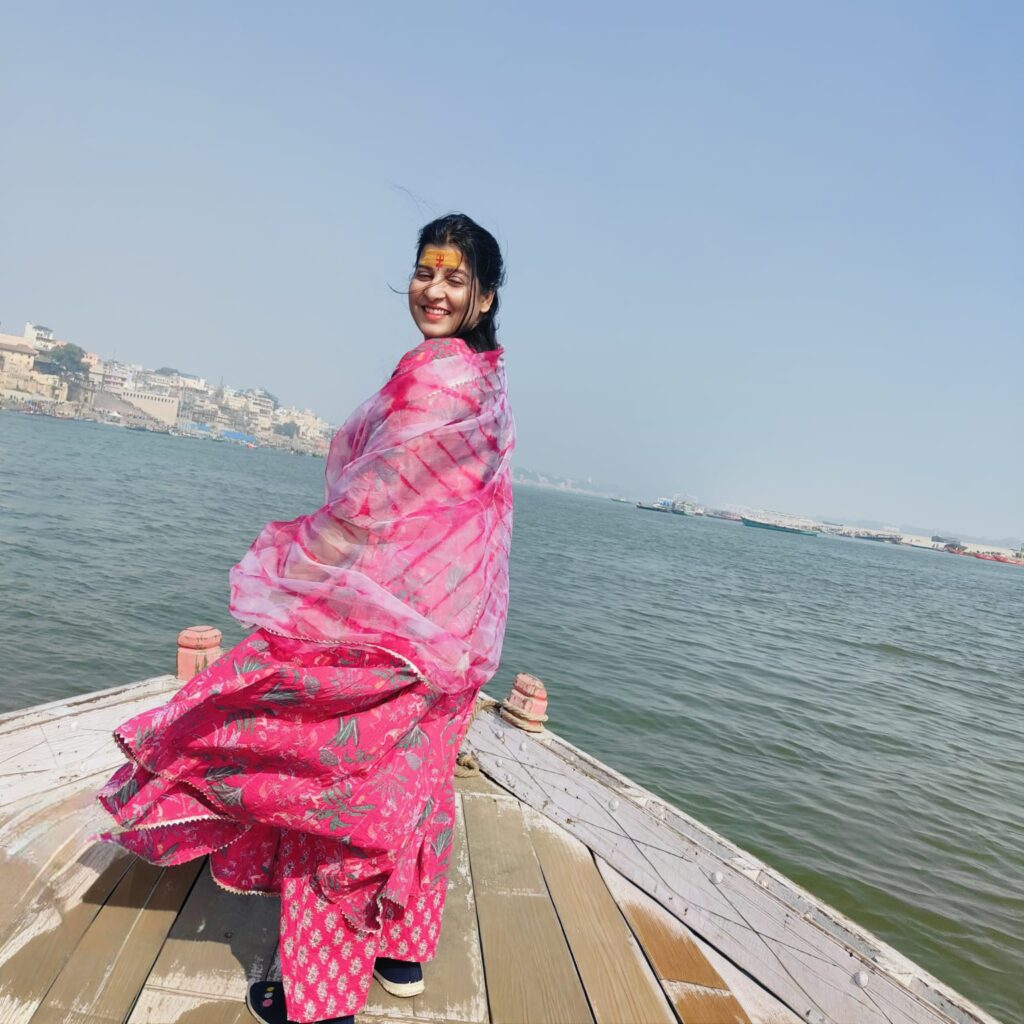
I actually enjoyed the rest of that ferry ride, and not in some “I’m an enlightened soul and should practice gratitude” way, but genuinely enjoyed it by interacting with other passengers, clicking photos, trailing my hand in the water, and leaning so far out that the boatman had to yell me back into reality.
The breeze played with my hair. Around me, people chatted and laughed and argued about absolutely nothing important. The South Indian grandmother finally got her holy dip, and Papa joined her too. The Titanic couple probably nailed their dramatic shot. I even tried to convince my parents to recreate it on our boat, but was brutally shut down, complete with scandalised looks.
By the time we pulled back to Dashashwamedh, I was starving for food, laughs, adventure, love, and…life.
We found a street stall run by a woman who looked fifty but moved like she was twenty. She slapped hot kachoris onto steel plates with the confidence that could win gold in the Olympics had kachori-slapping been a sport.
After our little food heist, it was time for the bazaar.
We wandered into the overcrowded lanes around Godowlia Market. Street-lamps glowed over embroidered jackets and brass Shivalingas. Momma paused at a shop where a weaver pulled gold-zari thread through cream silk. I found the perfect suit in deep emerald green, heavy with gold motifs.
Everything suddenly tasted better than it had any right to. But who was complaining?
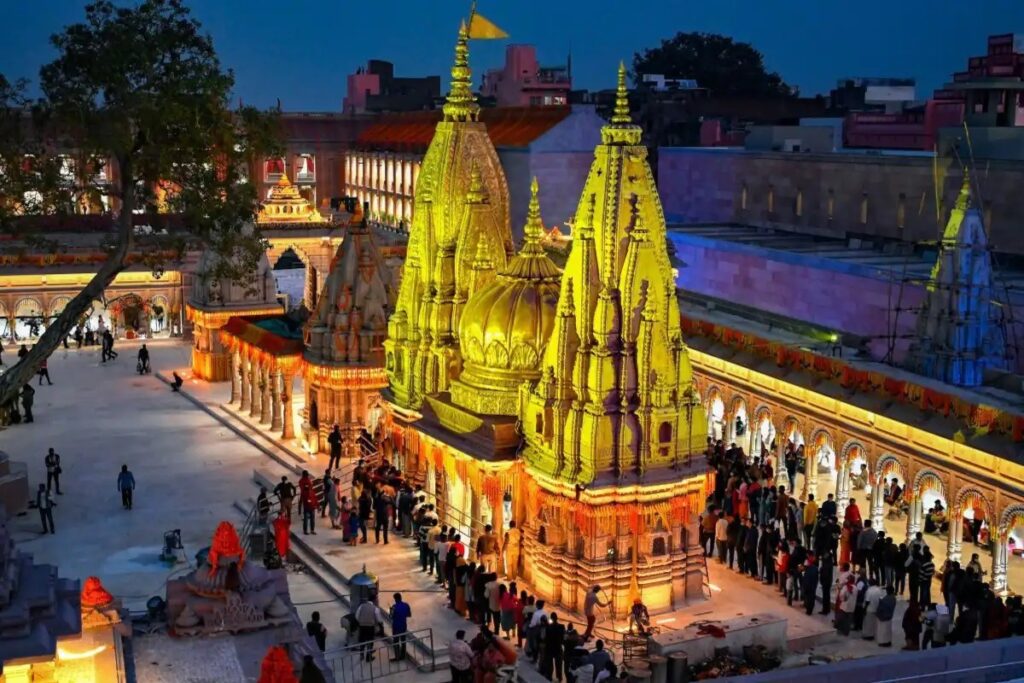
Baba Vishwanath Temple
The next morning, we joined the queue for the Kashi Vishwanath Temple. The line was eternal and moved at the speed of enlightenment.
I passed the time watching people. When the line finally inched us toward the entrance, we were guided first to Dundhiraj Ganesha, Prince of Kashi, who must be greeted before you even think of meeting Shiva. His little shrine sat tucked to the side, but nobody dared walk past without bowing. We didn’t either. I folded my hands, whispered a quick prayer, and hoped he wouldn’t hold my entire personality against me.
Only then were we allowed inside the temple premises, where the air hung thick with raw milk, rose petals crushed under thousands of feet, and that indescribable temple smell of Kashi.
I clutched my little steel bowl of milk and pushed toward the Shivalinga, elbowing past people.
I had to stand on my toes to steal glimpses of the Lord of the Universe, sitting in absolute stillness while the chaos of people, prayer, and devotion swirled around him like a cyclone.
It felt impossible yet perfectly natural. Like the world was allowed to fall apart as long as this one point remained whole.
Standing there…I felt aligned to the rhythm the universe had been humming all along. The chaos didn’t disappear. People still shoved, priests still shouted like traffic marshals, but none of it touched me the same way. I don’t think it ever would!
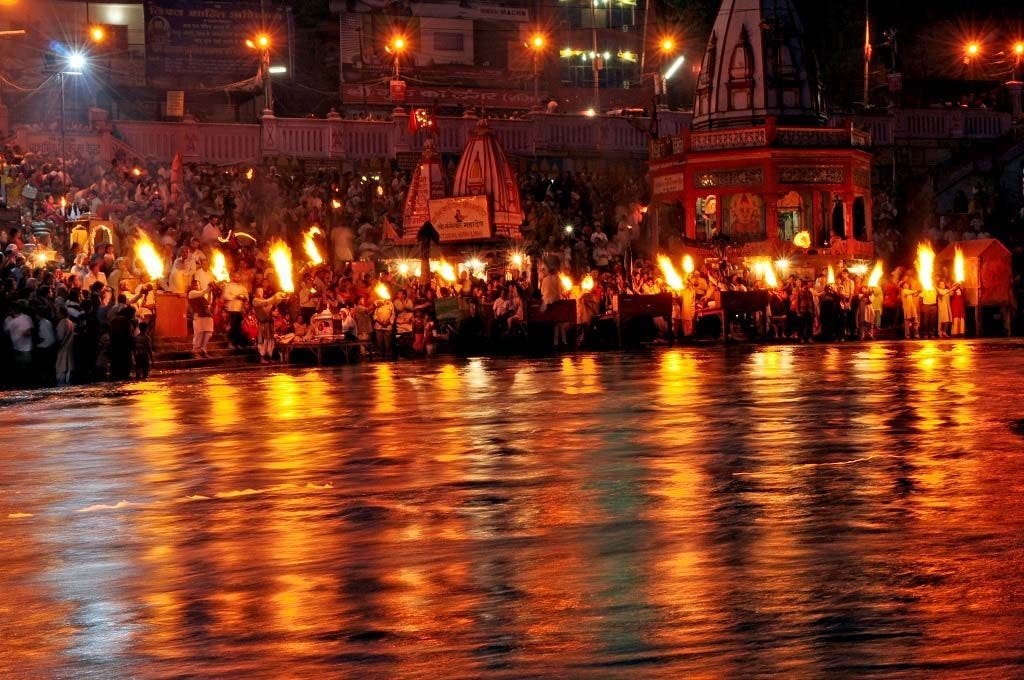
When the River Catches Fire
As the sun dipped, the ghats shifted, and the lights came on. The murmur rose as the priests draped in saffron and gold silk appeared. Each one held a massive five-tiered brass lamp.
Papa rented a boat for the Ganga Aarti. We paid ₹800 for the three of us, which felt steep until the priests appeared and I witnessed the river come alive in its most divine form as the priests moved in perfect sync, sweeping the lamps in arcs so wide they carved molten trails in the air. The flames drew slow spirals in ancient geometry performed on the river’s edge. Bells rang. Conch shells blew. Smoke curled like silk ribbons.
The Ganga mirrored it all, doubling every movement. Tiny leaf boats carrying lit diyas drifted past us. Each one was a small prayer someone had folded into the universe and hoped it wouldn’t get drowned or ignored.
Voices of men, women, kids, and tourists rose behind us. Nobody knew the words but hummed anyway. And then, as suddenly as it began, the aarti closed, leaving the river lit with drifting diyas and a quiet tranquility I didn’t know I needed.
What I’m Taking With Me
Mahadev Shiva didn’t send me back with success or certainty. Instead, he handed me myself. And that’s more than enough. I’m still going to attempt CS again. That’s the goal! But the way I’d pursue it would be different because I’m fundamentally different now.
Because here’s what Kashi taught me, most brutally and beautifully: I’m on a train headed toward one final destination: a pyre on some ghat somewhere. Maybe even Manikarnika if I’m lucky enough to die in the right city. What matters isn’t whether I arrive with the right credentials stamped on my forehead. It’s what I do between here and there.
Do I want to spend this entire journey staring at a door I haven’t managed to unlock yet, convinced I can’t enjoy anything until I’ve picked that particular lock?
Or do I want to look out the window at the world passing by, messy and beautiful and temporary, and actually live this journey instead of just grimly enduring it until some imaginary finish line?
I’m choosing the window.
If you’re thinking about making your own trip to Kashi, here’s what I wish someone had told me:
Best Time to Visit: October through March. Varanasi in summer hits 45°C, and no amount of spiritual awakening can protect you from the sunburn.
Getting There: Fly into Lal Bahadur Shastri Airport or take trains to Varanasi Junction. Autos and e-rickshaws work until you hit the old city’s narrow lanes.
Where to Stay: Guesthouses near Assi or Dashashwamedh run ₹800-1,500/night. For comfort, try BrijRama Palace or Ganges View Hotel. For reflection, ashrams like Sivananda Ashram welcome visitors (donation-based, simple, authentic).
Kashi Vishwanath Temple: Queue takes 2-4 hours. Go super early (6-7 AM) or late evening (after 8 PM). No phones, bags, or cameras allowed inside—lockers available at Prasad vendors. Don’t skip the Ganesha shrine first. Tradition says you must clear obstacles before meeting the destroyer.
Boat Rides: Sunrise ferries from Dashashwamedh to Assi Ghat start around 5:30 AM. Prices are negotiable. Evening Ganga Aarti starts around 6:45 PM—rent a boat for the best view (₹500-1000, seats 4-6 people).
Food: Kachori-sabzi for breakfast. Tamatar chaat at stalls near Dashashwamedh. Malaiyo, if you’re there in winter. Blue Lassi near the temple. Follow your nose to shops Google Maps doesn’t know about.
Beyond the Main Sites: Explore old city lanes early in the morning. Sarnath (where Buddha gave his first sermon) is 10 km away. Ramnagar Fort, across the river, has a quirky museum.
Most Importantly: Slow down. Sit by the Ganga at sunrise with terrible chai from a street vendor. Watch how even Manikarnika’s smoke moves like prayer. Get lost in lanes too narrow for Google Maps and let Kashi teach you what it taught me: that not all endings are tragic, and sometimes you need to watch things burn to remember what’s actually worth keeping.
Bam Bhole!
If you enjoyed reading this, check out some of my other articles here:
What is Varanasi famous for spiritually?
Varanasi is considered Hinduism’s holiest city, known for the Ganga River, Manikarnika Ghat cremations, Kashi Vishwanath Temple, and Ganga Aarti.
Why do people visit Manikarnika Ghat in Varanasi?
Manikarnika Ghat is believed to grant moksha (liberation) to those cremated there, making it one of the most sacred cremation grounds in India.
Is Varanasi a good place for spiritual healing after failure?
Yes. Many people visit Varanasi after personal setbacks to gain perspective on life, death, purpose, and detachment from material success.
What lessons does Varanasi teach about life and death?
Varanasi shows that life and death coexist openly—success, failure, love, and loss all end the same way, offering clarity on what truly matters.
Can traveling help you overcome academic or career failure?
Travel, especially to reflective places like Varanasi, can help reframe failure, reduce burnout, and restore emotional balance before pursuing goals again.
What is the significance of Ganga Aarti in Varanasi?
Ganga Aarti is a daily ritual honoring the river as divine, symbolizing gratitude, surrender, and the rhythm of life itself.

 Kayla Cosmos
 Cait Charles
 Trevor Carlson