
 Cait Charles
Table of Contents
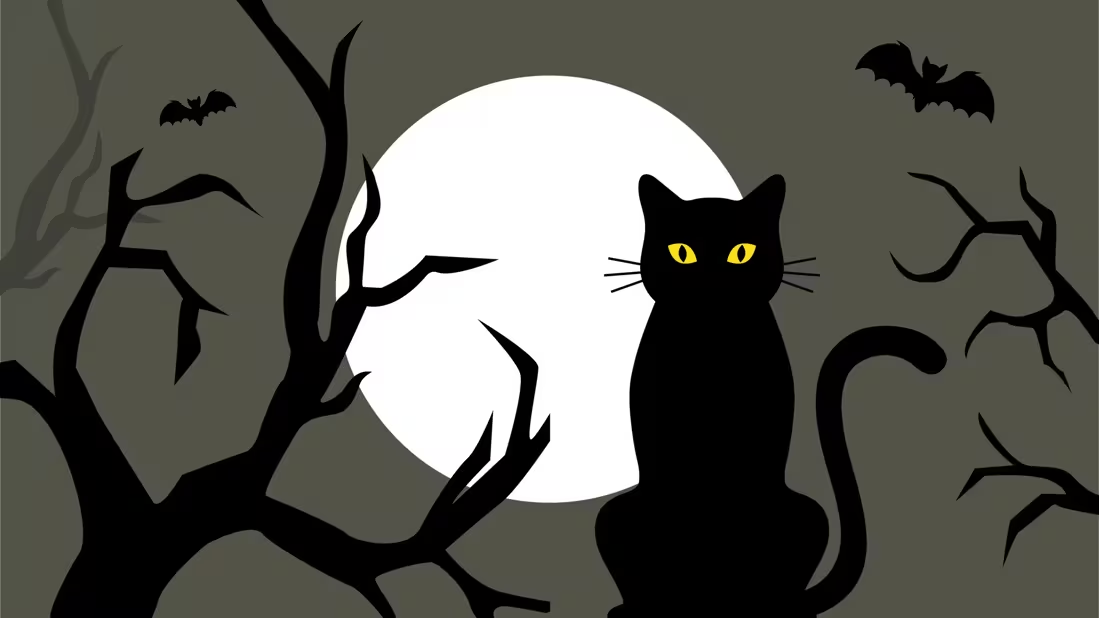
It’s bad luck to walk under a ladder. Don’t step on the cracks in the sidewalk. Black cat crossed your path? Watch out!
You’ve probably already heard these basic, common superstitions…but did you know that if you don’t finish your dinner, a terrifying monster made of the ghost of your leftovers past will run after you and beat you?!
If you were a kid growing up in Egypt, your parents might have instilled this fear in you in an attempt to compel you to finish your food. Think that’s a crazy superstition? Come with us as we explore some of the weirdest superstitions and customs we could find from cultures around the world.
Nigerian Superstition – Destroy Used Menstrual Pads
Here’s an interesting one: in Nigeria, women fear that their used menstrual pads will be stolen and used for black magic.
There, menstrual blood is believed to hold powerful spiritual energy–and stealing and using another person’s blood for ritual purposes is akin to stealing their mojo. The thief is thought to feed on that person’s wealth, well-being, health, or fortune. Worse yet, menstrual blood rituals can also be aimed at controlling, harming, or trapping a woman.
Therefore, women fear that their menstrual blood, if left unattended, could be used by bad actors to attempt to bewitch them or otherwise cause them spiritual harm.
As a result, many women wash, burn, or bury their menstrual pads in order to keep their blood from being used for nefarious purposes.

Japanese Superstition – Blood Type and Personality
In Japan, your blood type might influence more than just who you can receive blood from in times of need – it could have repercussions for your career choices, relationships, and even which products you buy.
Back in 1916, a Japanese doctor called Kimata Hara published a paper linking blood type to temperament. Despite the paper’s lack of scientific rigor, it totally took off a few years later, when researcher Takeji Furukawa published another paper on it. The theory gained so much traction that it began to permeate many areas of life in Japan.
Here’s what personality traits you might exhibit based on your blood type, according to Dr. Hara:
Type A: People with this blood type are thought to be organized, responsible, and good with details, though these traits also lead many of them to be perfectionists. Type A’s are said to excel at working on teams, as they’re sensitive and patient with others. However, they’re also known for anxiety and stubbornness.
Type B: These are allegedly the passionate creatives amongst us. Cheerful and outgoing, yet individualistic, type B’s are also associated with eccentricity, irresponsibility, and selfishness.
Type AB: AB’s are known as complex, deep thinkers with a penchant for rationality, adaptability, and even artistic talent. These traits have earned them a reputation as the most mysterious of all the blood types. Their complexity and ability to see multiple perspectives is also their downfall, as they can be indecisive. At their worst, ABs are considered overly-critical.
Type O: Type O people are loved for their friendliness and optimism, and are regarded as natural-born leaders. They’re also lauded for their confidence and resilience. Darker traits of O are self-centeredness and unpredictability.

While the theory is taken far less seriously nowadays than it used to be, it is still well-known and has made quite a mark on Japanese society–to the point where there are even companies that produced blood-type specific products like chewing gums, soft drinks, bath salts, and even condoms.
In the past, it was commonplace for employers to ask prospective employees for their blood types on application forms; similarly, certain blood types were thought to be more and less compatible with others, such that people have even made decisions about marriage based partially on blood type compatibility theories.
Korean Superstition – Fan Death
If you visit Korea, you may find alarmed locals banging on your door if you leave the fan on with the windows and door closed–but for a good reason: they believe that this will kill you. This superstition is known as ‘fan death’, and while you probably won’t actually die, dismissing it might result in some very worried aunties and uncles.
The origins of this superstition remain a mystery. It may have arisen in the 1920s or 30s, when electric fans were first introduced to Korea and people were wary of their safety. There were complaints of nausea, asphyxiation, and facial paralysis. Of course, these afflictions weren’t really caused by fans, but people thought they were.
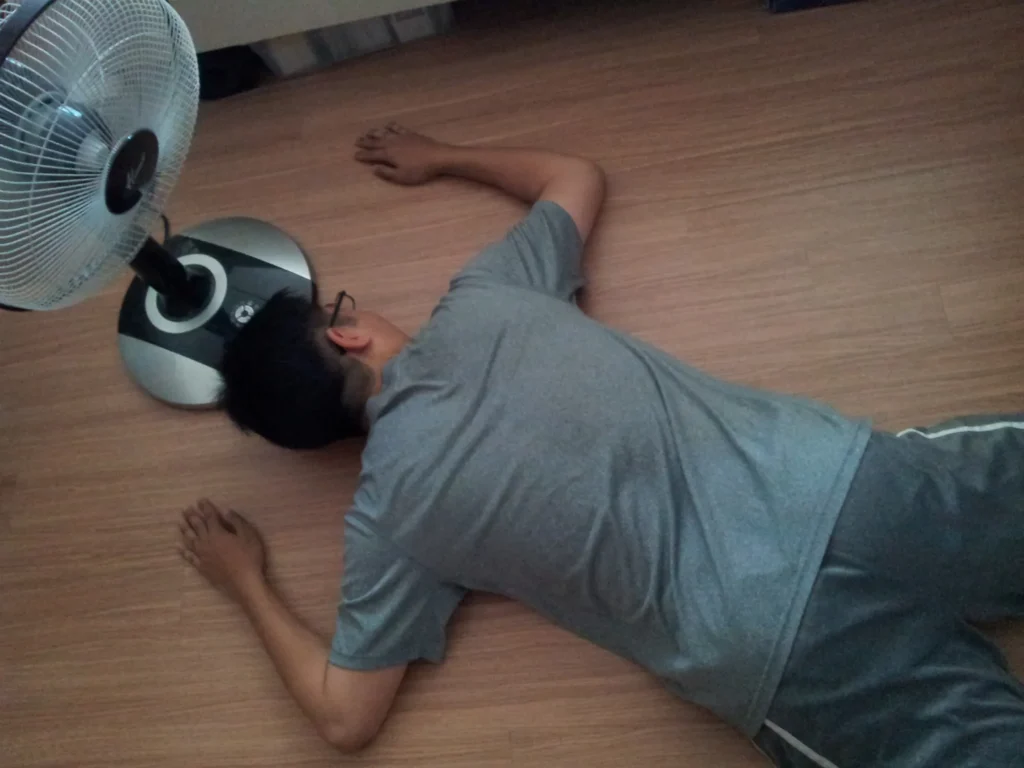
There’s also a conspiracy theory that ‘fan death’ was invented by the government in order to lower energy consumption during Korea’s 1970s energy crisis.
I’m not sure if that’s true, but if it is, it worked a little TOO well – the idea was still widespread and frequently talked about when I was in Korea in the summer of 2020, with even some young locals wary of fan use in closed rooms.
Furthermore, a 2007 Reuters article alleged that Korea’s consumer agency estimated that 7 to 10 people per year died of ‘fan death’. And, fans from manufacturer Shinil Industry Co. even bore warning labels reading “This product may cause suffocation or hypothermia”.
Fan death is a classic case of correlation ≠ causation: People see a dead body, a fan, and a closed window, and assume that the fan must have been the cause of death. Whether you believe it or not, ‘fan death’ remains one of Korea’s most enduring modern myths. It also makes a great conversation starter on a hot summer night!
Egypt/Muslim World – Dunk the Fly, then Remove
Throughout Muslim communities in the Middle East, there’s a superstition that if a fly lands in your drink or soup, you should stir it in and then take it out. This odd custom stems from a hadith (scriptures containing sayings from the prophet Muhammed, PBUH) that reads:
“If a house fly falls in the drink of any one of you, he should dip it (in the drink) and take it out, for one of its wings has a disease and the other has the cure for the disease.”
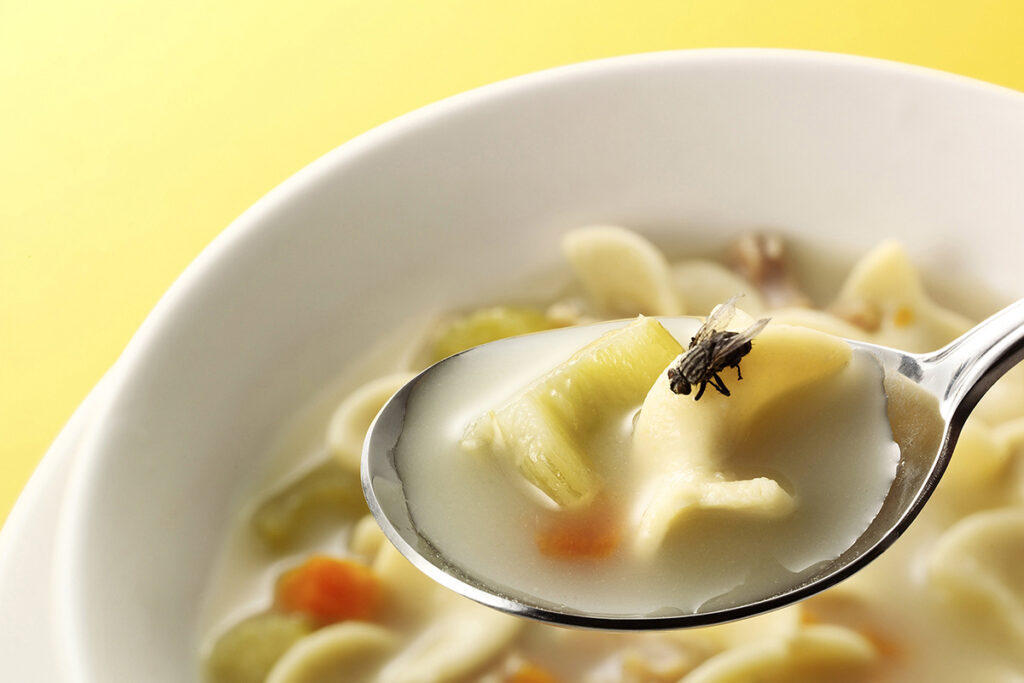
In other words, when the fly lands in the liquid, we can’t be sure if either or both wings touched the surface. In case only the diseased wing touched the surface, submerging the fly neutralizes the chances of catching a disease because the wing that cures disease also made contact with the liquid, thereby ‘curing’ the disease wrought by the other wing.
Of course, you could also just stir it in, neutralizing the disease, and eat it instead of removing it. Extra protein!
Interpretations of this hadith vary across the Muslim world, so not everyone follows this literally.
Rural Thailand’s Superstition – Burn Dead Babies for Good Luck
I want to start off by emphasizing that this is not a common practice – it’s a superstition found at a temple in a small village in rural northern Thailand, and most locals will tell you that this practice is frowned upon and not considered ‘real Buddhism’. But to those who follow it, this practice is effective and even sacred.
Known as ‘golden baby’, this ritual is only practiced by a few specific temples. It involves taking the corpses of already-dead babies (no actual baby-killing is required or permitted), burning them, wrapping them in a gold leaf, and encasing them in a glass coffin that is then buried under a shrine.
Usually, babies who were stillborn or miscarried are used for this practice; the idea is that humans gave the baby life, and then the baby gives life to others through this practice. As the fetus or body burns, believers chant, pray, and attempt to communicate with the child’s spirit.
There’s an entire industry around it–some people pay a lot of money to get a blessed and mummified baby corpse for a shrine in their homes. More commonly, pieces of the corpse are put into amulets, which are said to bring protection and luck when worn.
However, there’s a catch: caretakers of a golden baby, in whole or in part, must provide it with offerings, affection, and attention regularly, as though it were a living child. Failure to do so is believed to result in bad luck.
Turkey’s Superstition – Chewing Gum at Night Turns to Dead Flesh?!
In Turkey, there’s a superstition that says that if you chew gum at night, it turns into dead flesh. Think you’re safe if you’re chewing gum during the day, and then the sun goes down? Nope! Once night falls, it’s thought to transform into the flesh of the dead right in your mouth.
The internet doesn’t seem to know how exactly this superstition arose, but it has become ubiquitous not only in Turkey but also in neighboring countries.
Bonus Turkish superstition with unknown origins: Don’t cut your nails at night, either; it will shorten your lifespan!

From menstrual pad burnings to baby mummification to deadly fans and monsters made of leftovers, the world is absolutely packed with superstitions that make walking under a ladder look tame.
Every single one of these beliefs, no matter how weird they seem to outsiders, makes perfect sense within its own cultural context. What do you think an outsider visiting your culture would laugh at or be confused by? Let’s keep collecting the superstitions in the comments below!
If you enjoyed this article, check out some of my other weird and wacky stories!
What are some truly weird superstitions around the world that most people haven’t heard of?
Beyond the classic broken mirrors and black cats, some of the weirdest superstitions around the world include Nigeria’s belief that used menstrual pads can be stolen for black magic, Korea’s fear of “fan death,” and Turkey’s idea that chewing gum at night turns into dead flesh. These lesser-known customs show how deeply spiritual symbolism can shape everyday behavior in different cultures.
Why do some cultures have superstitions involving bodily fluids, like menstrual blood in Nigeria?
In Nigeria, menstrual blood is thought to hold powerful spiritual energy. The superstition warns that if someone steals a woman’s pad, they could use it for harmful rituals aimed at draining her wealth or health. This belief reflects how deeply many global superstitions are tied to ideas of purity, protection, and spiritual vulnerability.
How did Japan’s superstition about blood types and personality become so widespread?
Japan’s blood-type personality superstition began with early 20th-century research lacking scientific rigor but gained cultural momentum. Today, though not taken as seriously, it still influences matchmaking, workplace perceptions, and even product marketing — a perfect example of how superstitions can embed themselves in modern life.
What is “fan death,” and why is it one of Korea’s most persistent superstitions?
“Fan death” is the superstition that sleeping in a sealed room with a fan running can cause suffocation or hypothermia. Despite scientific evidence refuting it, warning labels on fans and generational stories keep this superstition alive in Korea, making it one of the most famous modern superstitions.
Why do some Muslims dunk a fly into their drink before removing it?
This superstition comes from a hadith stating that one wing of a fly carries disease while the other carries the cure. Dipping the fly ensures both wings touch the liquid, supposedly neutralizing harm. While not universally practiced, it is one of the most intriguing superstitions rooted in religious texts.

 Prapti Shahkumar
 Cait Charles
 Trevor Carlson


 Jagrati Singh